Architecture Lab — National Health OS Design
A strategic laboratory for designing sovereign-scale health architectures, based on first principles,
flow-governance, and Symbiotic Intelligence.
In an era where every organization rushes to buy “AI tools,” most forget a fundamental truth:
tools do not create transformation — architecture does.
Systems fail not because the algorithms are weak, but because the underlying flows are broken.
Before any app, dashboard, or AI engine can produce value, the ecosystem beneath it must be re-designed
from the ground up.
What Exactly Is Architecture?
Architecture is not about software stacks, vendors, frameworks, or cloud preferences.
Architecture is the invisible structure that dictates how information, authority,
and value flow through your system.
If your clinicians must log in five times to treat one patient, that is not a workflow problem —
it is an architectural failure.
If your AI model cannot integrate with upstream and downstream systems, the problem is not the AI —
it is the plumbing beneath it.
Architecture determines what is possible, what is forbidden, what scales, and what collapses under stress.
In a modern health ecosystem, architecture is strategy in motion.
Architecture Is Flow, Not Software
Traditional digital systems operate on “App-Thinking” — isolated solutions for isolated problems.
This mindset creates silos, fragmentation, vendor lock-in, and exponential integration debt.
Modern systems require Flow-Thinking — an event-driven, unified ecosystem where
information moves predictably, securely, and continuously across nodes.
When flow exists, any new AI tool can integrate in days rather than years.
When flow is absent, even the world’s best algorithms fail in practice.
The Architect vs. The Technician
Modern organizations are trapped in the Efficiency Illusion — moving faster without
moving forward. They optimize obsolete processes instead of redesigning them.
The Technician is the master of How.
They optimize, automate, accelerate, and refine. Their world is defined by constraints.
The Architect is the master of Why.
They question assumptions, redesign flows, delete obsolete structures, and shape system-level behavior.
A Technician improves a broken path.
An Architect deletes the path and redraws the map.
| Feature |
The Technician |
The Architect |
| Focus |
Optimization (Speed) |
Evolution (Direction) |
| Mindset |
Incremental |
First Principles |
| Toolset |
Best Practices |
Design Patterns |
| Enemy |
Inefficiency |
Irrelevance |
| Outcome |
Digital Repair |
Digital Transformation |
Why Digital Transformations Fail
70% of digital transformations fail because organizations hire Technicians to do an Architect’s job.
They buy AI tools to patch broken workflows, dashboards to decorate fragmented data, and automations
to speed up processes that should not exist in the first place.
This is not transformation — this is Digital Repair.
The Architect’s Weapon: First Principles
The Architect deconstructs problems to their atomic truths and rebuilds systems based on logic, not
legacy constraints.
Where the Technician asks: “Which vendor has the best scheduling tool?”
The Architect asks: “Do we even need appointments?”
This is how obsolete workflows are not optimized — they are eliminated entirely.
The Call to Build
We are entering the age of Symbiotic Intelligence, where biological cognition and digital computation
merge. In this environment, organizations cannot be “managed” — they must be
architected.
The future belongs to those who dare to redesign systems from first principles.
The question for every leader is simple:
Do you have Technicians paving the cow path?
Or Architects designing the highway?
30 National Health OS Blueprints
Each blueprint is a sovereign-scale architectural module designed for national transformation.

Blueprint 01 — Health Nation OS
The sovereign operating system that unifies clinical, financial, mobility, diagnostic, and strategic layers into one national-scale intelligence grid.
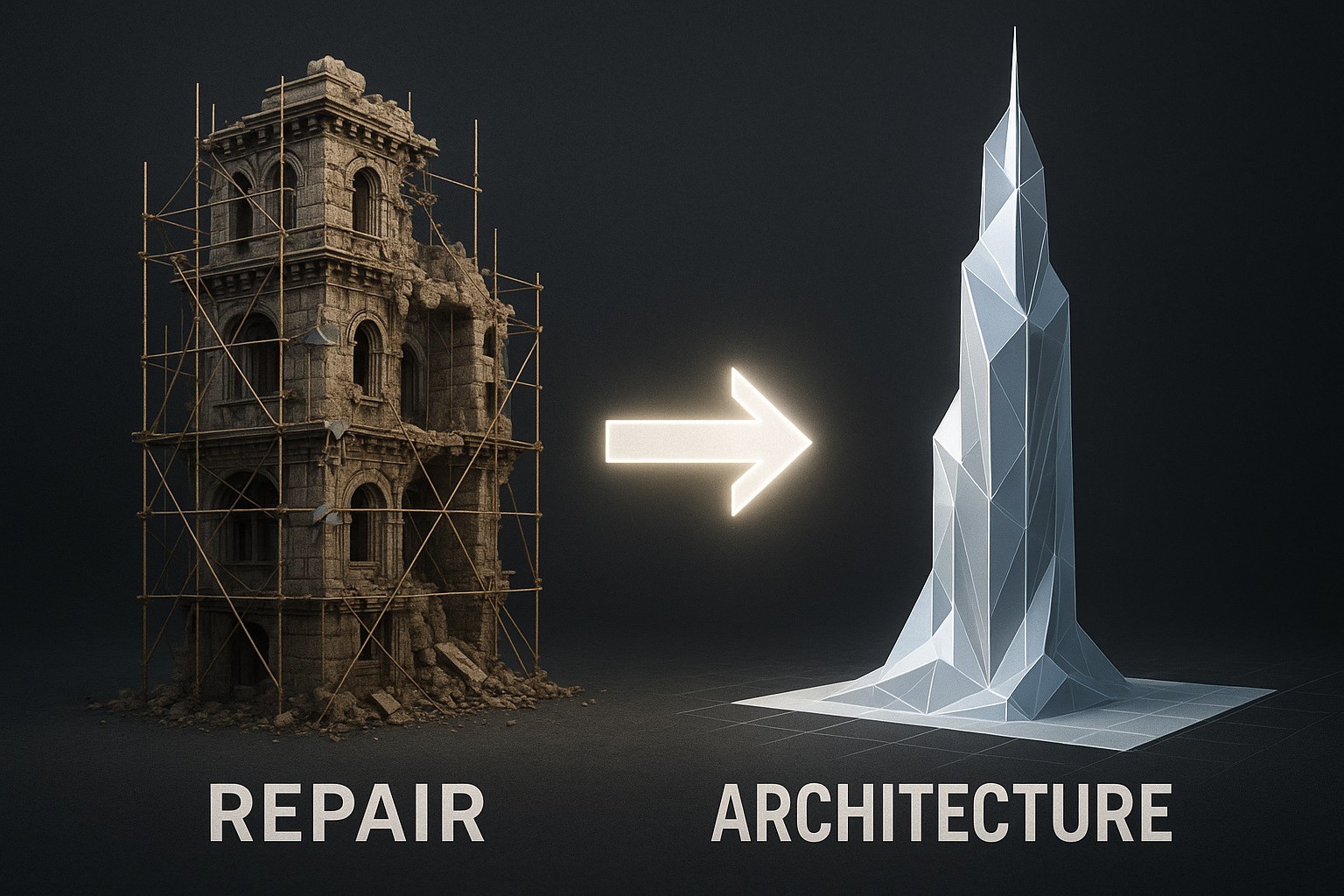
Blueprint 02 — Architecture Over Repair
A foundational doctrine replacing short-term digital fixes with system-level redesign based on first principles and long-horizon architectural logic.

Blueprint 03 — Crisis Architecture Framework
A structural resilience dome ensuring national coherence, rapid stabilization, and integrity preservation during systemic crises.

Blueprint 04 — Strategic Control Tower
A national predictive governance layer synchronizing mobility, diagnostics, workforce capacity, crisis intelligence, and resource allocation.

Blueprint 05 — Clinical Efficiency Paradox
A structural model revealing collapse thresholds, throughput dynamics, and redesign strategies for sustainable high-load clinical systems.

Blueprint 06 — AI Governance Model
A 12-layer sovereign AI governance framework embedding safety, auditability, ethical logic, and real-time oversight into the national OS.

Blueprint 07 — Macro–Micro Alignment Model
A coherence engine aligning national-level policy logic with real clinical execution pathways, eliminating governance drift.
Blueprint 08 — Financial Nervous System
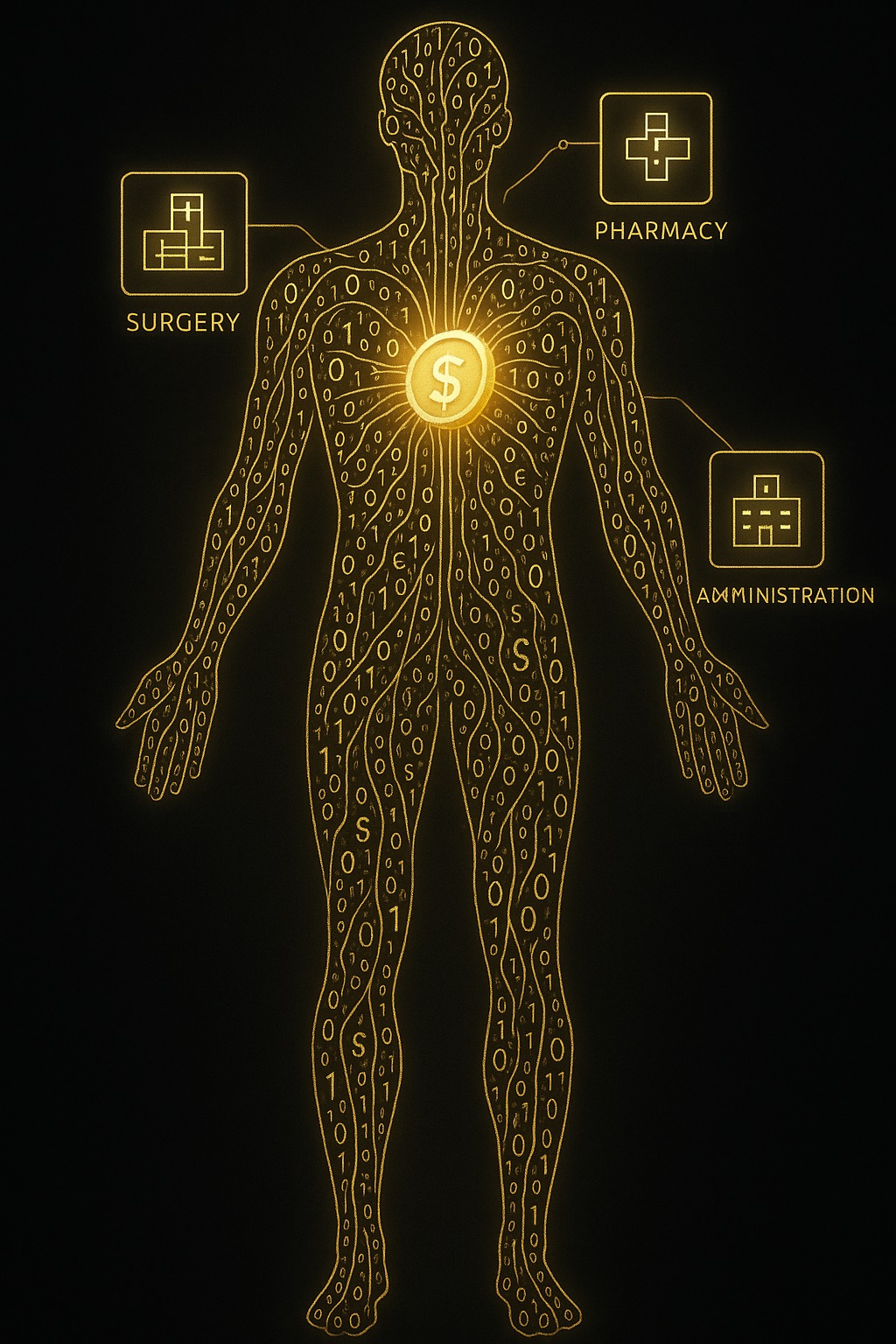
A real-time financial intelligence mesh unifying reimbursement logic, liquidity modeling, staff attribution, and event-driven billing.

Blueprint 09 — Distributed Care City
A national diagnostic and specialist load-balancing architecture eliminating bottlenecks and enabling sovereign equitable access.
Blueprint 10 — Intelligent Workforce Orchestration
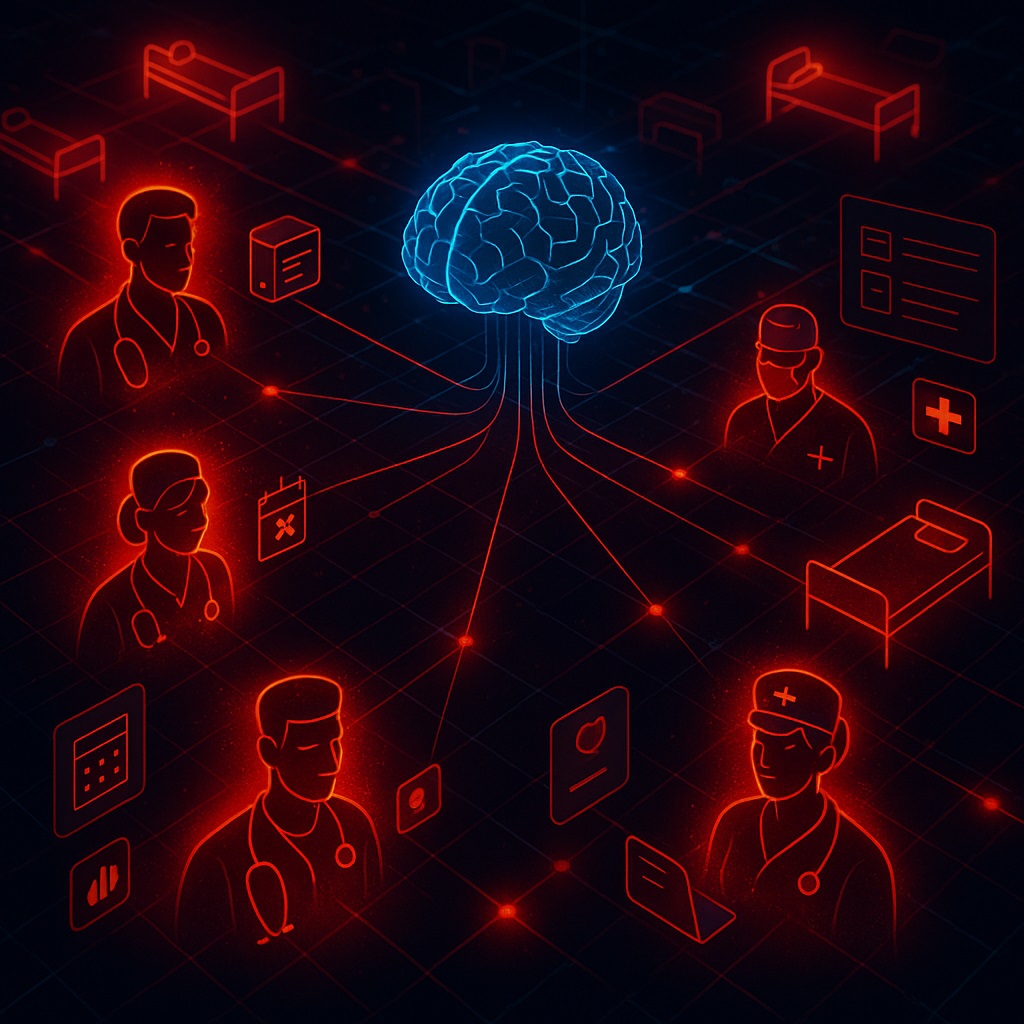
A predictive workforce logistics engine optimizing staffing flows, burnout thresholds, and real-time cross-departmental load alignment.

Blueprint 11 — Artificial Soul Framework
A deep cognitive substrate providing memory continuity, adaptive reasoning, and cross-domain synthesis for national clinical intelligence.

Blueprint 12 — Bespoke AI Assistant
A personalized intelligence augmentation layer supporting clinicians, executives, and policymakers with contextual reasoning and decision flow.

Blueprint 13 — Federated Clinical Reasoning Engine
A privacy-preserving distributed reasoning engine enabling national collaborative diagnostics without sharing raw data.
Blueprint 14 — Multi-Agent Care Workflow AI
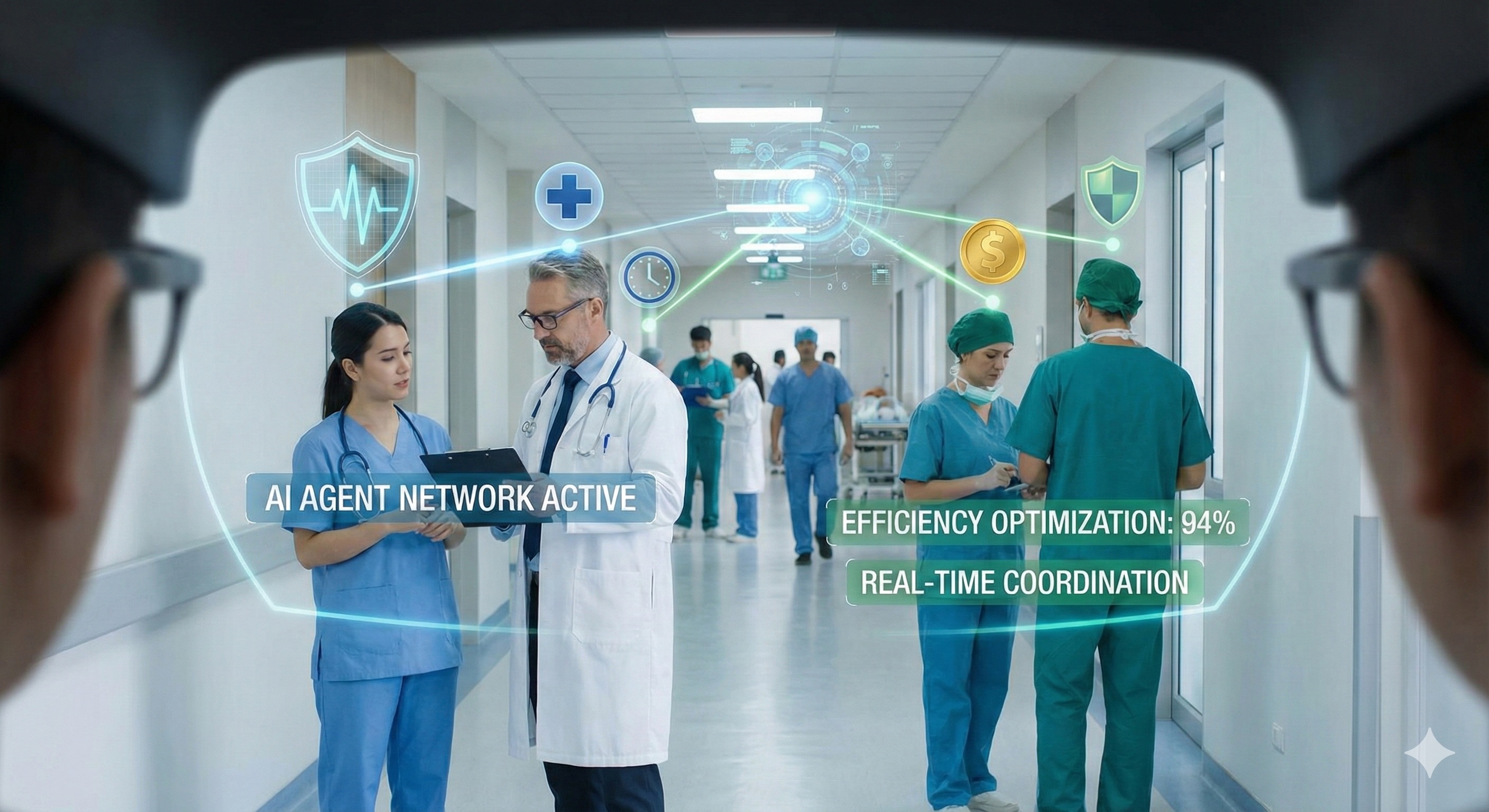
A coordinated multi-agent AI mesh managing diagnostics, mobility, staffing, routing, and real-time operational load.

Blueprint 15 — Medical NLP Interoperability Pipeline
A universal clinical language pipeline converting text into computable intelligence for national-scale interoperability.
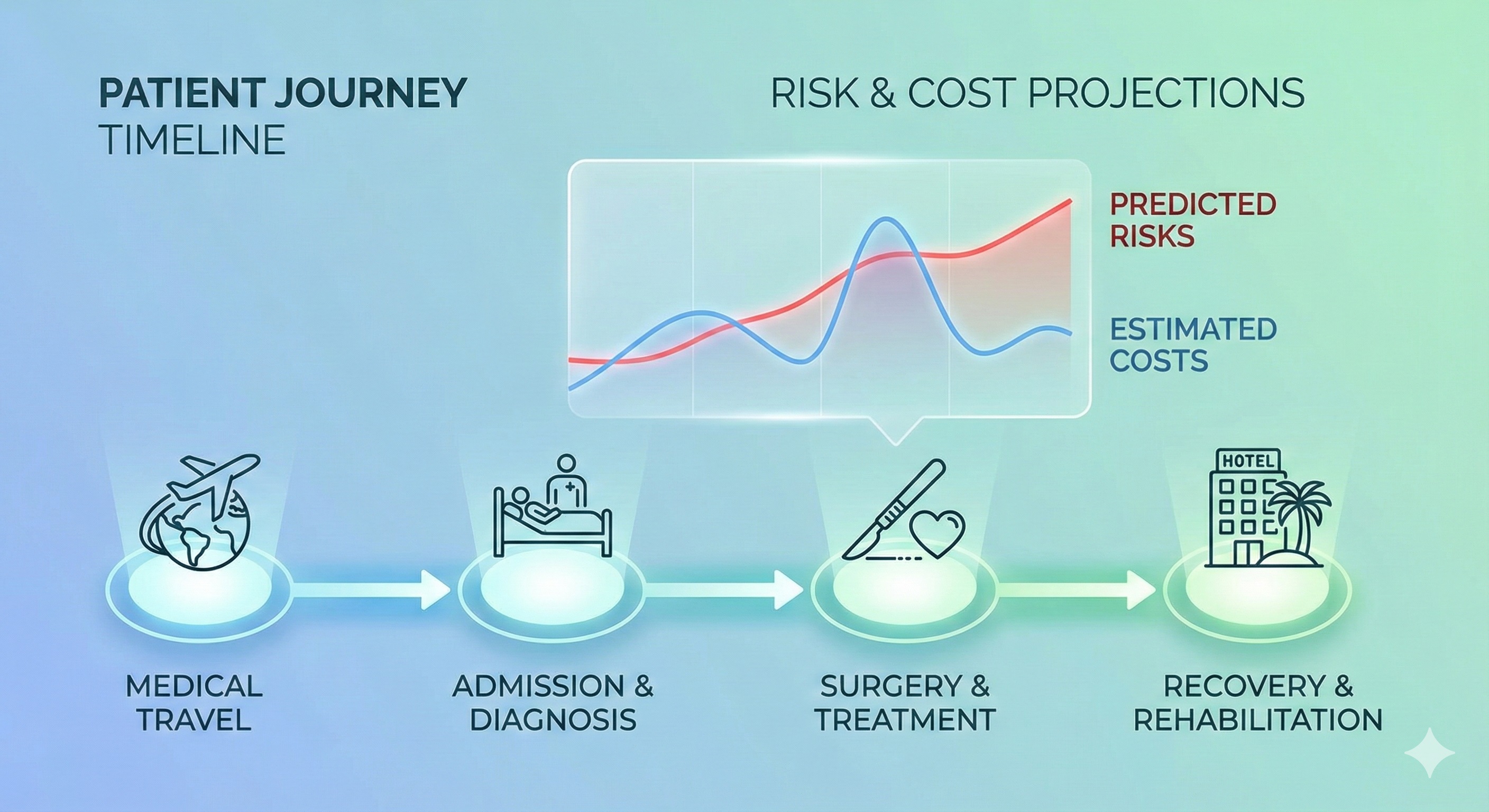
Blueprint 16 — AI-Empowered Clinical Simulation Lab
A predictive simulation engine modeling patient trajectories, diagnostic load, vulnerabilities, and crisis propagation.

Blueprint 17 — National Digital Twin for Healthcare
A computational replica of the national health ecosystem enabling scenario analysis, resilience modeling, and long-horizon planning.

Blueprint 18 — Autonomous Health Monitoring Layer
A real-time AI risk envelope engine detecting anomalies, safety drifts, systemic instabilities, and compliance breaches.

Blueprint 19 — Clinical Cognition AI Layer
A reasoning engine modeling cognitive drift, diagnostic reasoning patterns, uncertainty propagation, and decision load.

Blueprint 20 — Continuous National Learning Health Model
A perpetual learning engine turning multi-source signals into adaptive loops, improving the entire ecosystem in real time.

Blueprint 21 — Self-Healing Health Infrastructure
An autonomous infrastructure layer capable of detecting, isolating, and correcting failures across the national health ecosystem.

Blueprint 22 — Operational Neural Mesh
A logistics and intelligence mesh connecting diagnostics, mobility, supply-chain, emergency and workforce nodes.

Blueprint 23 — Autonomous Health Supply Chain Grid
A predictive automated supply-chain grid coordinating medicines, consumables, cold-chain, diagnostics, and logistics.

Blueprint 24 — Intelligent Health Transportation Network
A predictive routing network managing emergency mobility, patient distribution, and equitable regional access.

Blueprint 25 — National Health Resilience Index
A national resilience scoring engine measuring structural integrity, continuity, and vulnerability gradients.

Blueprint 26 — Dynamic Waiting Room Elimination System
A distributed national intake engine eliminating queues by dynamically routing patients across capacity nodes.

Blueprint 27 — Clinical Capacity Forecasting Grid
A forecasting grid predicting ICU demand, surgical load, imaging throughput, workforce availability, and crisis horizons.

Blueprint 28 — National Health Mission Control
A sovereign command interface integrating mobility, diagnostics, workforce, resilience and strategic intelligence.
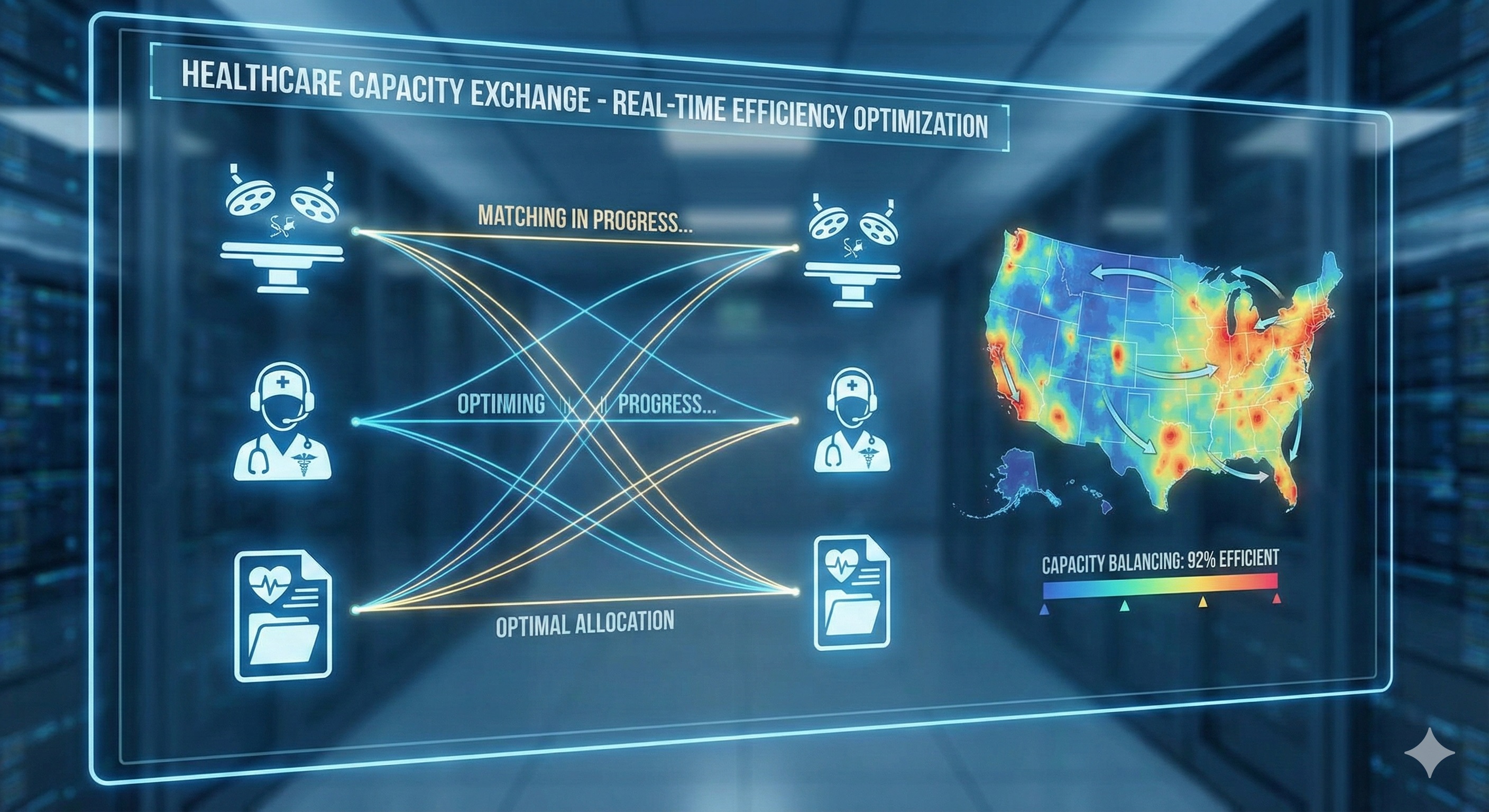
Blueprint 29 — National Health OS Kernel
The sovereign computational kernel enforcing coherence, predictive priority, safety laws, governance logic, and zero-drift operation.

Blueprint 30 — Health Nation Digital Twin
A sovereign-scale predictive twin simulating national health dynamics, crisis propagation, policy outcomes, and operational flow.
Submit Your Architecture Request
If you or your organization is developing a health system, digital platform, AI workflow,
national interoperability framework, or any large-scale operational model — you can submit
your concept for a full architectural review.
The Architecture Lab evaluates projects through first principles, flow-governance,
and national-scale design logic.
You may contact the Lab directly:
Email: executive@lohrasbi.info
LinkedIn:
linkedin.com/in/nader-lohrasbi
The Lab works with governments, hospitals, startups, global institutions, research groups,
and strategic transformation teams.